
If your industrial warehouse or manufacturing facility relies on HVAC chillers, refrigeration units, or cooling equipment, you’ve likely heard about chiller pads. But what exactly is a commercial concrete chiller pad, and why is it such a critical component for Minnesota businesses?
Understanding Commercial Concrete Chiller Pads
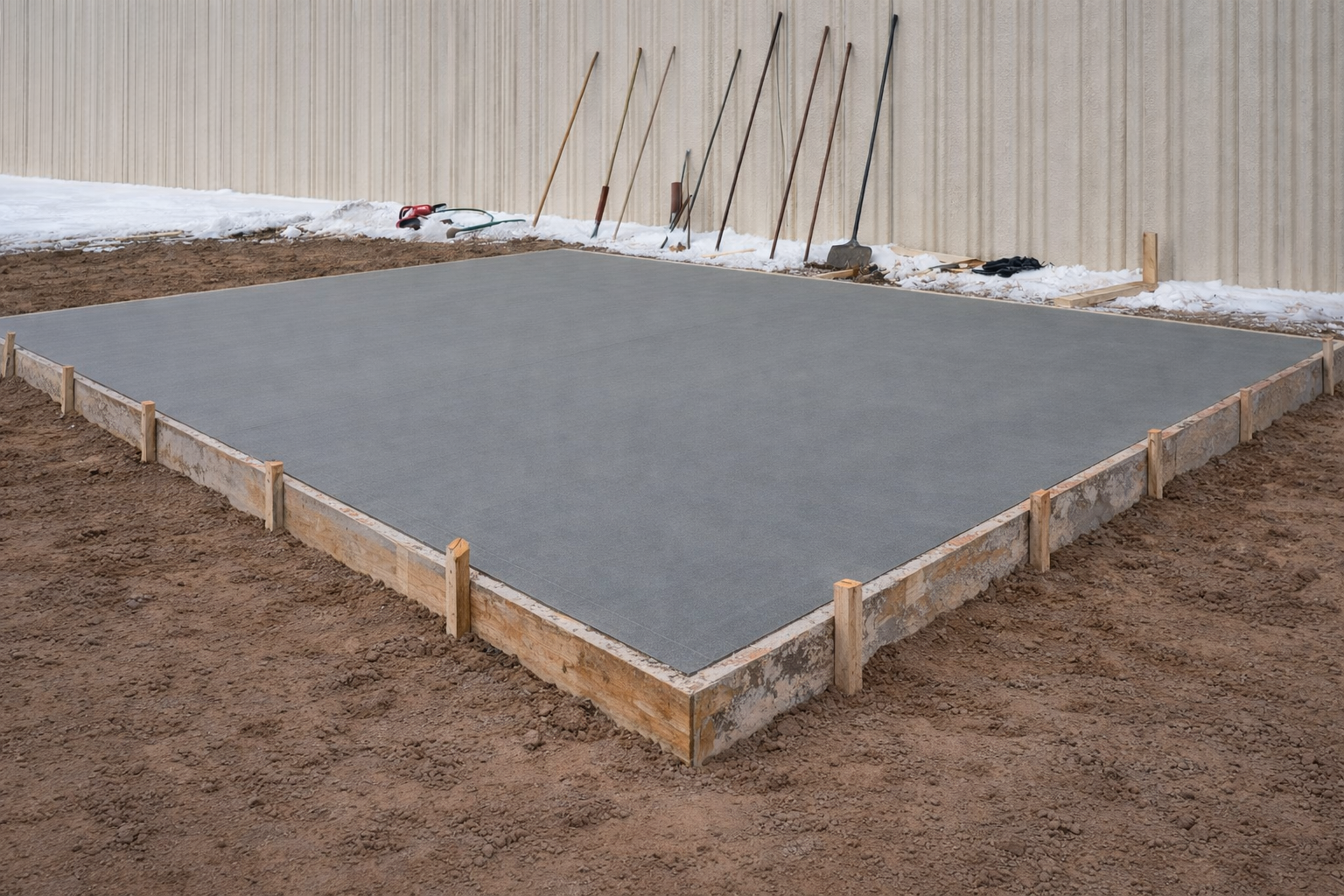
A commercial concrete chiller pad is a reinforced concrete foundation designed to provide a stable, level base for HVAC chillers and other heavy cooling equipment. These pads typically extend at least 6 inches beyond the equipment footprint on all sides and are elevated 6 inches above the finished floor to protect equipment from water exposure.
Most commercial concrete chiller pads are constructed using 4000 psi concrete with steel reinforcement, ensuring they can handle the substantial weight and vibration of industrial cooling equipment while providing decades of reliable service.
The Critical Function of Chiller Pads
Industrial chillers serve an essential role in manufacturing, food processing, data centers, and countless other commercial applications. Chillers remove heat from liquids (usually water) which can then be circulated through heat exchangers to cool equipment, products, or spaces.
The commercial concrete pad serves several vital functions:
Stability and Load Distribution: Equipment pads provide a stable and level foundation for HVAC units, protecting them from damage and helping to reduce vibration. This prevents equipment from settling unevenly or shifting over time, which could damage connections and reduce operational efficiency.
Moisture Protection: Elevating equipment at least 6 inches prevents water from reaching the feet of the chiller, protecting expensive equipment from corrosion and electrical damage.
Vibration Control: A level pad keeps fan shafts aligned and prevents the imbalance that leads to humming, rattling, or thumping sounds, while also reducing stress on mechanical components.
Why Minnesota's Climate Makes Chiller Pads Essential
Minnesota’s extreme weather conditions make properly installed commercial concrete chiller pads absolutely critical. Here’s why:
Freeze-Thaw Cycles: The Twin Cities experiences an average of 155 days with freezing temperatures each year, creating constant expansion and contraction in concrete. Frequent freeze-thaw cycles create expansion and contraction that can destroy poorly constructed foundations.
Frost Heave Protection: Frost heave is a location-dependent concern that requires proper footing depth and drainage design. In Minnesota, this means ensuring your commercial concrete chiller pad extends below the frost line—typically 42 inches—to prevent lifting and cracking during winter months.
Snow and Ice Accumulation: Minnesota’s heavy snowfall averaging 54 inches annually means equipment must be elevated to prevent snow burial and ensure proper drainage when thaw cycles occur.
Proper Drainage: Minnesota installations require slabs on well-compacted, free-draining subgrade to prevent water accumulation that could freeze and damage both the pad and the equipment.
Benefits for Industrial Warehouses and Facilities
For Minnesota warehouses and industrial facilities, investing in proper commercial concrete chiller pads delivers significant advantages:
Equipment Longevity: A stable base extends the lifespan of equipment by limiting stress on internal components, protecting your capital investment in expensive cooling systems.
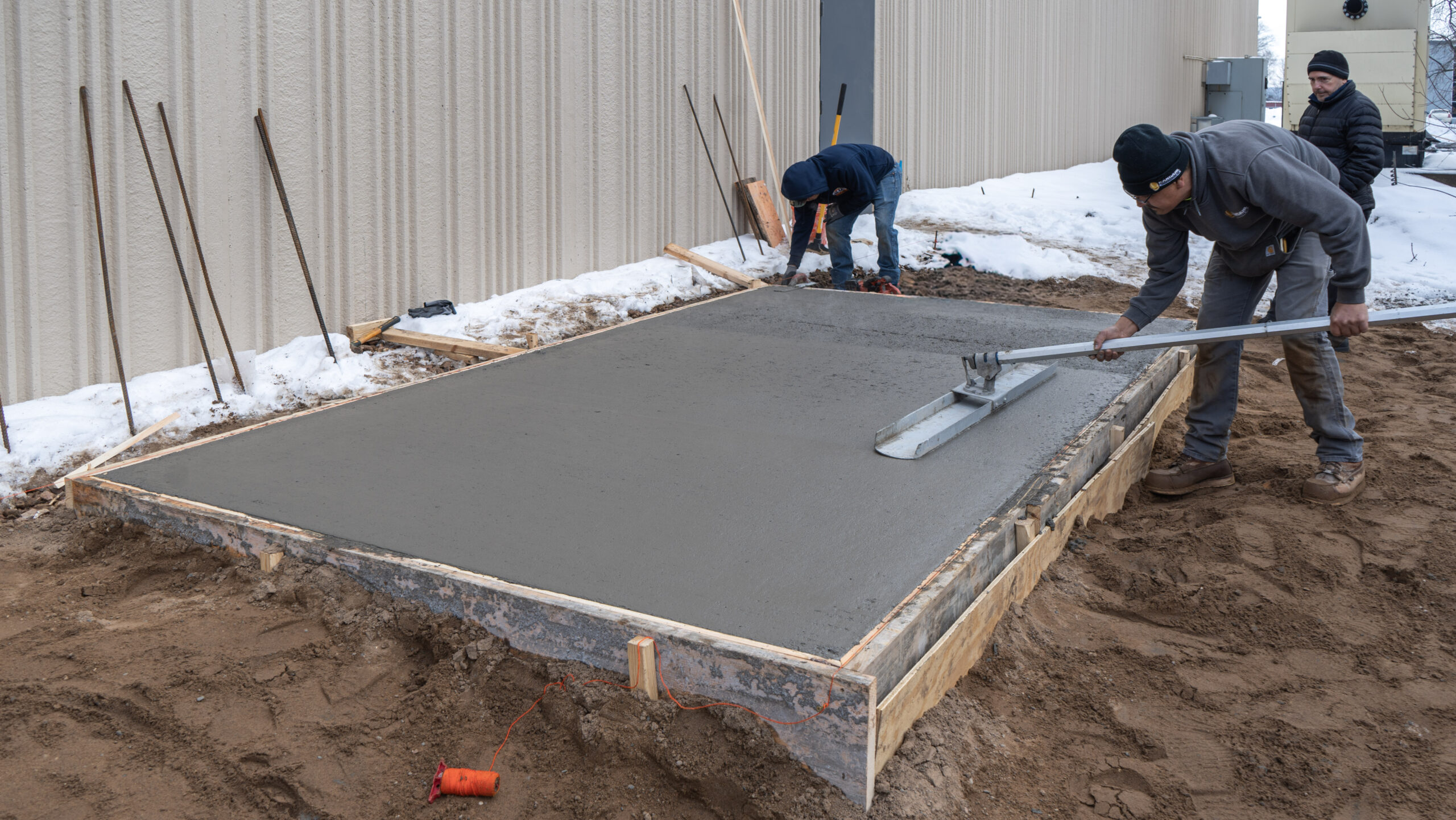
Operational Reliability: Properly installed pads prevent the equipment failures, refrigerant leaks, and costly downtime that result from unstable or moisture-damaged foundations. Recently, Randahl Construction completed a commercial concrete chiller pad installation for So Good So You in Inver Grove Heights, MN, ensuring their cooling equipment has the reliable foundation needed to support their food manufacturing operations year-round.
Code Compliance: NEC requires certain clearances in front of electric and control panels, and proper pad installation ensures your facility meets all safety and building code requirements.
Energy Efficiency: Level, stable equipment operates more efficiently, reducing energy costs over the system’s lifetime while maintaining optimal cooling capacity.
With over 40 years of experience in commercial concrete work throughout Minnesota, Randahl Construction understands the specific requirements for chiller pad installation in our challenging climate. Our team uses air-entrained concrete for freeze-thaw durability, ensuring your commercial concrete foundation will withstand Minnesota’s harshest weather conditions.
Whether you’re installing new cooling equipment or replacing aging infrastructure, a properly constructed commercial concrete chiller pad is an investment in your facility’s operational efficiency and equipment protection. Don’t let Minnesota’s climate compromise your critical cooling systems—ensure your equipment has the solid foundation it needs to perform reliably year-round.
Contact Randahl Construction today to discuss your industrial facility’s commercial concrete chiller pad needs.