
As a facilities manager in the Twin Cities, you understand that every decision impacts your operation’s efficiency, safety, and bottom line. When it’s time to install new equipment—whether it’s an industrial compressor, processing machinery, HVAC unit, or specialized manufacturing equipment—the foundation supporting that investment matters more than most realize. A commercial concrete equipment pad is that critical foundation.
1. The Hidden Cost of Inadequate Equipment Support
Many facilities managers inherit equipment installed on subpar foundations or attempt quick fixes when adding new machinery. The consequences reveal themselves gradually: excessive vibration leading to premature equipment failure, cracked or uneven surfaces creating safety hazards, and maintenance headaches that compound over time. A properly engineered commercial concrete equipment pad eliminates these issues before they start.
2. Safety First: Protecting Your Team and Assets
In pharmaceutical facilities, medical labs, and food and beverage processing plants where precision and cleanliness are non-negotiable, equipment stability isn’t just about performance—it’s about compliance and safety. An improperly supported machine can shift during operation, creating dangerous conditions for operators. In Minnesota’s freeze-thaw cycles, inadequate foundations deteriorate rapidly, leading to trip hazards and potential equipment failure.
A professionally installed commercial concrete equipment pad provides:
- Level, stable surface that prevents equipment drift and vibration transmission
- Proper load distribution to handle heavy machinery without settling or cracking
- Chemical resistance crucial for facilities handling corrosive materials
- Smooth, sealed surface that meets sanitation standards in regulated environments
3. Maximizing Equipment Performance and Lifespan
Consider this: Industrial equipment represents a significant capital investment. Whether you’re managing a warehouse in Bloomington, a manufacturing facility in Brooklyn Park, or a processing plant in Minnetonka, that equipment needs the right foundation to perform as designed.
Excessive vibration from improper support doesn’t just create noise complaints—it accelerates wear on motors, bearings, and precision components. Equipment manufacturers specify foundation requirements for a reason. When those specifications aren’t met, you’re looking at:
- Increased maintenance frequency
- Premature component failure
- Voided warranties
- Production downtime
- Higher operating costs
The right concrete pad absorbs and dampens vibration, maintains precise leveling, and provides the thermal stability needed for consistent equipment operation through Minnesota’s temperature extremes.
4. Operational Efficiency and Long-Term Value
Facilities managers are tasked with optimizing operations while managing budgets. A properly installed commercial concrete pad delivers value in ways that become apparent over time:
Reduced Downtime: Equipment remains properly aligned and operational, minimizing unexpected shutdowns.
Lower Maintenance Costs: Stable foundations mean less frequent adjustments and repairs to both the pad and the equipment it supports.
Flexibility for Future Changes: Professional installation includes proper reinforcement and planning for utilities, making future equipment upgrades or relocations simpler and less disruptive.
Regulatory Compliance: In pharmaceutical, medical, and food processing facilities, proper equipment foundations are often part of compliance requirements for GMP, FDA, and safety standards.
5. The Twin Cities Advantage: Local Expertise Matters
Minnesota’s unique climate demands concrete work that accounts for frost depth, soil conditions, and seasonal temperature swings. Working with contractors who understand local conditions ensures your equipment pad performs year-round, not just during installation.
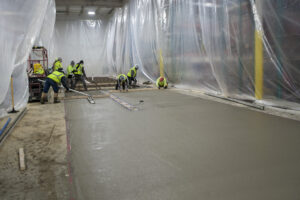
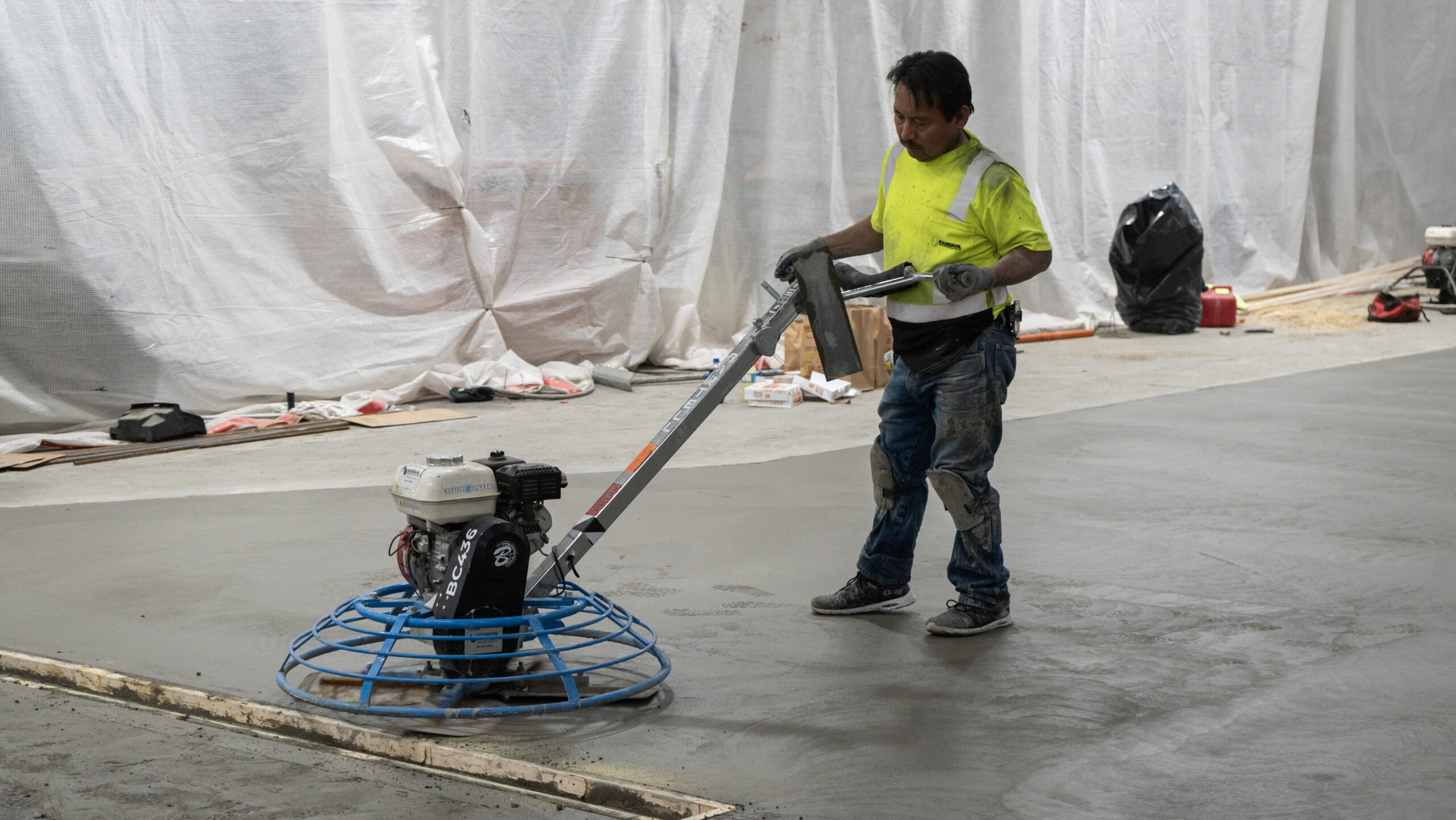
View the video below for what a commercial concrete equipment pad pour looks like. This was done for Activar’s manufacturing facility in Eden Prairie, MN.
6. Making the Investment
When evaluating equipment installation projects, facilities managers should view the foundation as integral to the equipment itself, not an afterthought. The upfront investment in a professional commercial concrete equipment pad pays dividends through enhanced safety, extended equipment life, reduced maintenance, and uninterrupted operations.
Your facility’s productivity depends on equipment that performs reliably. That reliability starts with the concrete beneath it. Whether you’re planning a new installation or addressing issues with existing equipment, the foundation deserves the same attention and expertise as the machinery it supports.
Ready to discuss your facility’s equipment pad needs? Contact Randahl Construction to learn how we help Twin Cities facilities managers create safer, more efficient operations through expert commercial concrete solutions.