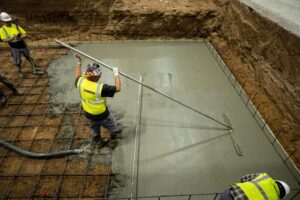

At Randahl Construction, we’ve been pouring commercial concrete across Minnesota for over 40 years, and we’ve heard just about every question imaginable. Whether you’re planning a new warehouse slab, new retail space flooring, or office building, understanding the basics of commercial concrete can help you make informed decisions for your project. Here are the eight questions we hear most often.
1. What's the difference between commercial and residential concrete?
Commercial concrete projects typically require higher PSI (pounds per square inch) ratings than residential work. While a home driveway might need 3,000-4,000 PSI, commercial concrete for industrial facilities or parking structures often requires 4,000-6,000 PSI or higher to handle heavy traffic and equipment loads. The scale, engineering requirements, and compliance standards are also much more complex for commercial projects.
2. How does Minnesota's freeze-thaw cycle affect commercial concrete?
This is one of our most frequently asked questions, and for good reason. Minnesota’s harsh winters create unique challenges for commercial concrete. The freeze-thaw cycle can cause cracking and deterioration if the concrete isn’t properly designed and installed. We address this by using air-entrained concrete, which contains tiny air bubbles that give water room to expand when it freezes, preventing damage. Proper joint spacing and sealing are also critical for Minnesota projects.
3. How long does commercial concrete take to cure?
While commercial concrete may be ready for light foot traffic within 24-48 hours, it takes about 28 days to reach full strength. However, this timeline can vary based on mix design, weather conditions, and project specifications. In Minnesota’s colder months, we may use heated enclosures or special curing blankets to maintain proper temperatures during the curing process.
4. What types of commercial concrete finishes are available?
Commercial concrete offers numerous finish options beyond the basic smooth trowel. Popular choices include broom finishes for slip resistance, burnished finishes for warehouses, and polished concrete for retail spaces. The right finish depends on your building’s function, traffic patterns, and design goals.
5. How much does a commercial concrete project cost?
Costs vary widely based on project size, complexity, site conditions, and specifications. Factors affecting price include excavation needs, base preparation, concrete thickness, PSI requirements, finish type, and any special features like radiant heating or colored concrete. The best approach is to request a detailed estimate based on your specific project requirements.
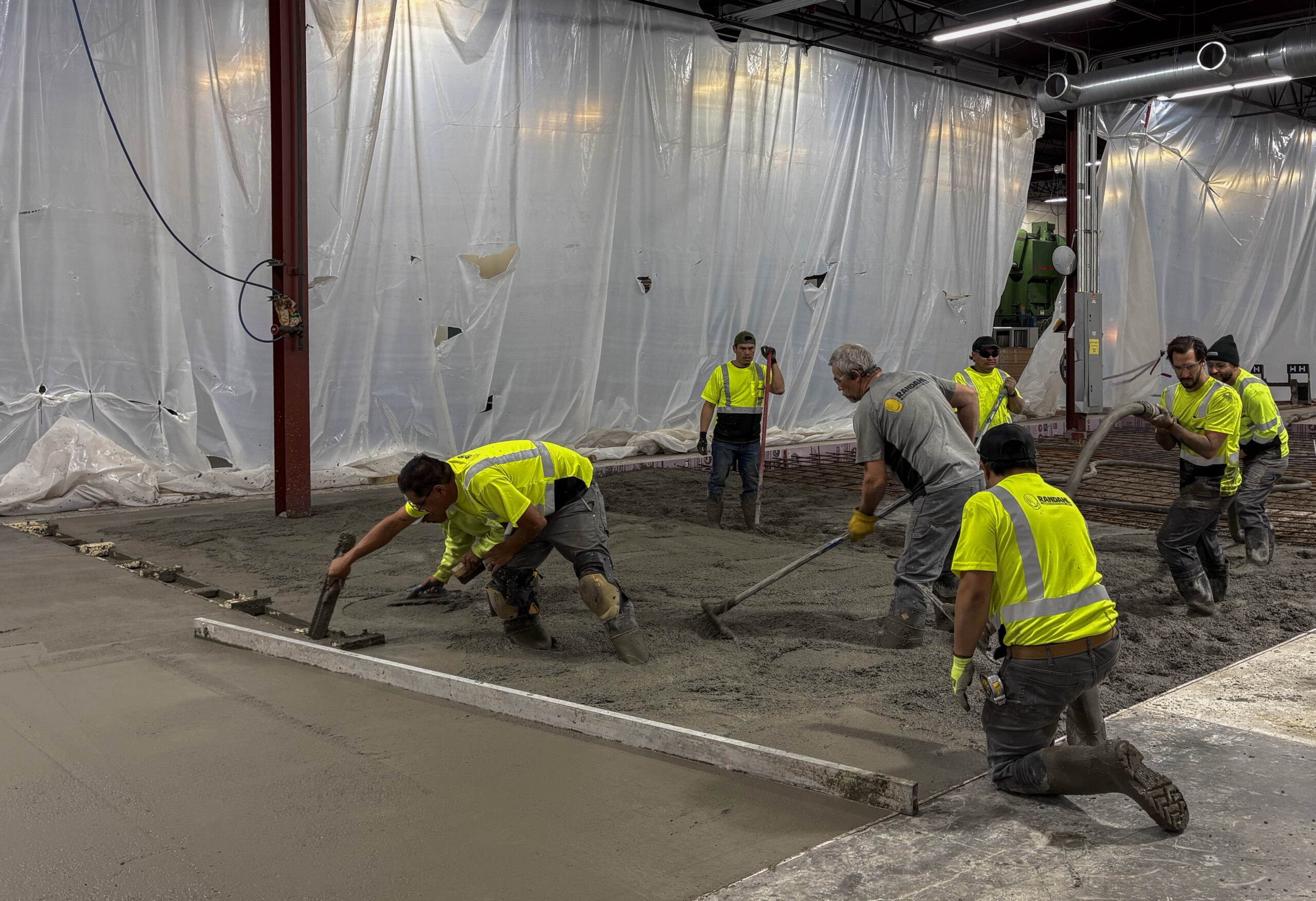
See below for a look at how our team tackles a typical industrial slab installation inside a manufacturing facility.
6. Do I need permits for commercial concrete work in Minnesota?
Yes, commercial concrete projects in Minnesota require building permits and must meet state and local building codes. The permitting process involves submitting plans, engineering specifications, and often soil reports. Experienced commercial concrete contractors like Randahl Construction handle permit coordination as part of the project management process, ensuring all work meets Minnesota’s strict commercial building standards.
7. What maintenance does commercial concrete require?
Properly installed commercial concrete is relatively low-maintenance, but it’s not maintenance-free. Regular cleaning, periodic sealing (every 2-5 years depending on traffic), prompt crack repair, and joint maintenance help extend the life of your concrete. In Minnesota, removing snow and ice promptly and using concrete-safe de-icing products is essential to prevent surface deterioration.
8. How long will my commercial concrete last?
With proper installation and maintenance, commercial concrete can last 30-50 years or more. Minnesota’s climate does place additional demands on concrete longevity, which is why working with experienced contractors who understand local conditions is crucial. Quality materials, proper mix design, correct installation techniques, and regular maintenance all contribute to maximizing your concrete’s lifespan.
Ready to Start Your Project?
Understanding these common questions is just the beginning. Every commercial concrete project has unique requirements, and Randahl Construction is here to guide you through the process from planning to completion. Contact us today to discuss your commercial concrete needs.