Commercial Concrete Repair & Replacement
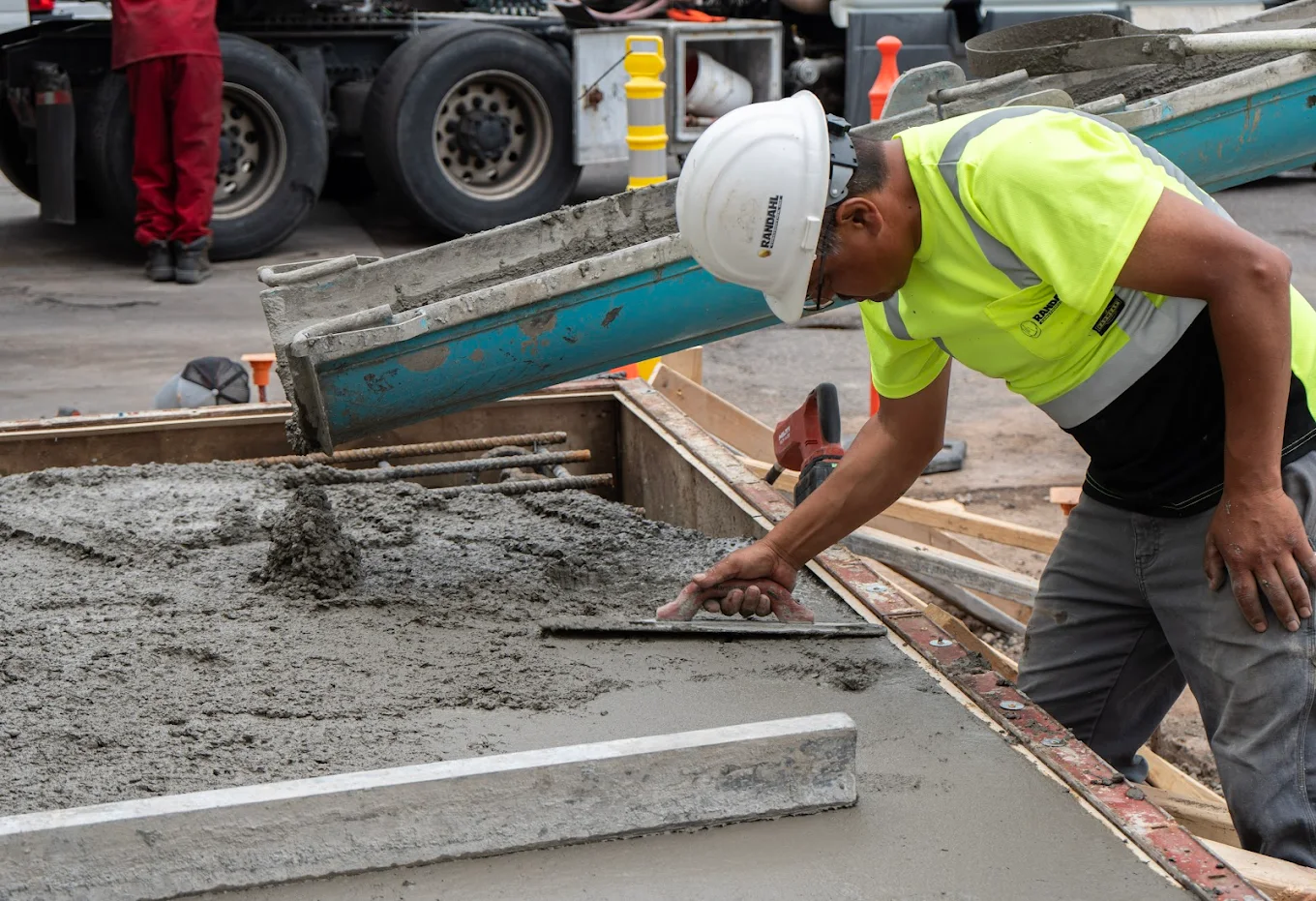
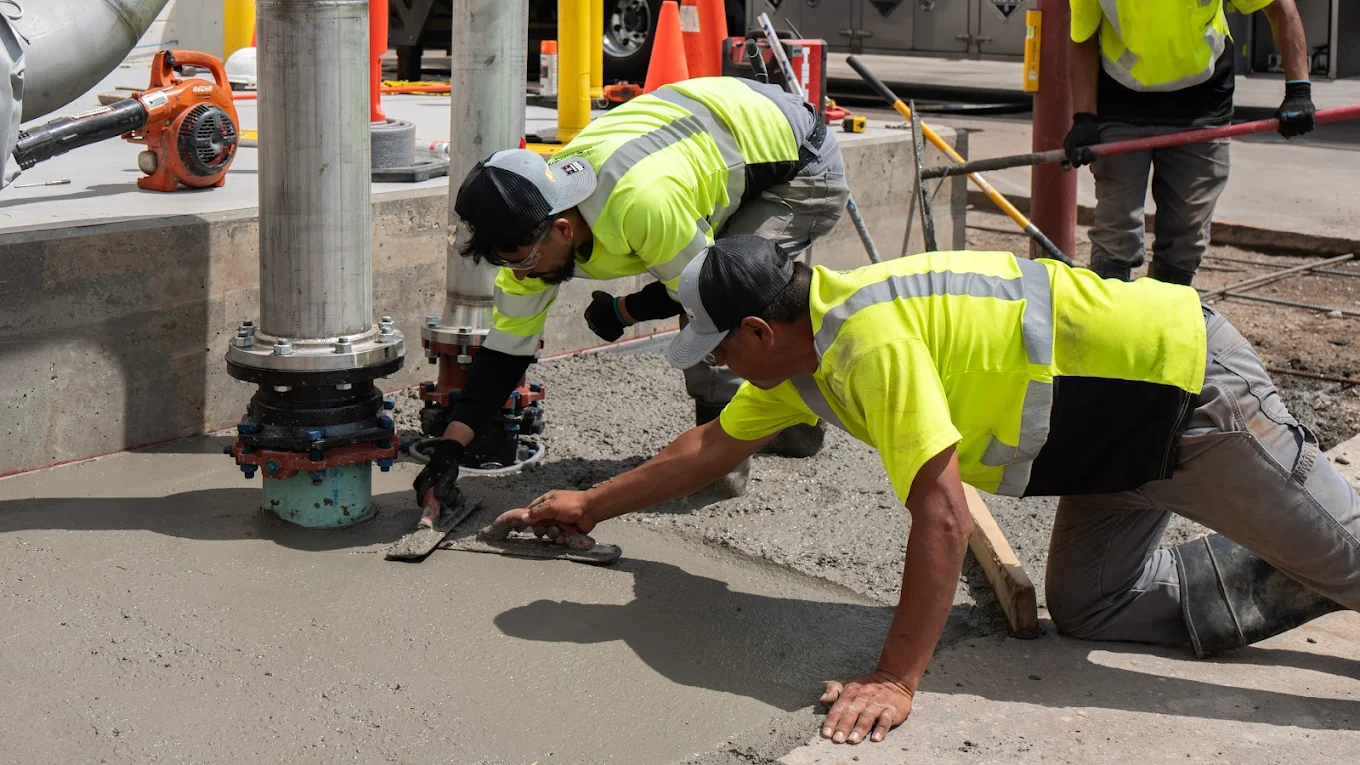
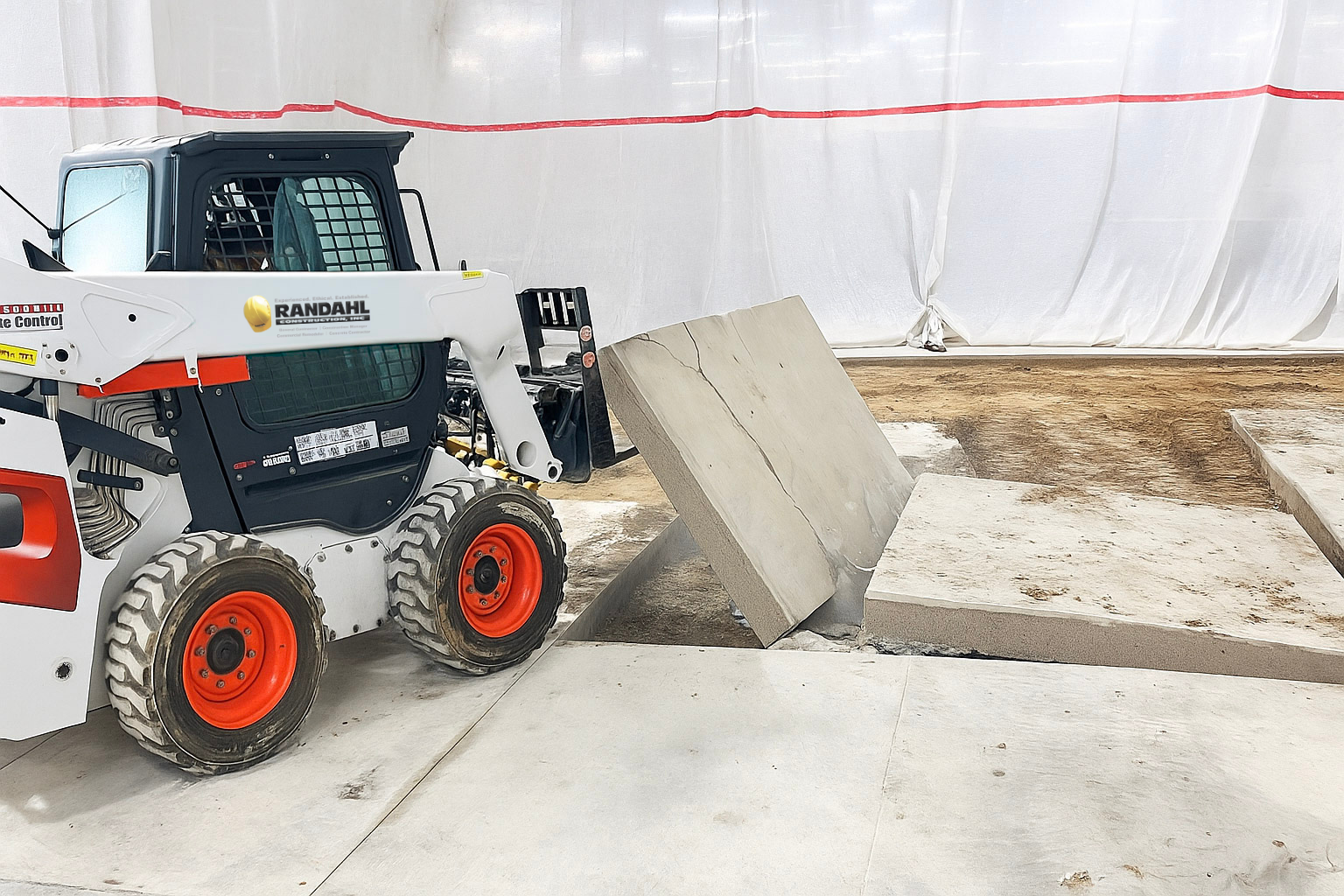
Randahl Construction specializes in fast, durable concrete repairs and replacements for commercial and industrial spaces. Whether it’s patching, grinding, or full removal and pour-back, we’ll get you back in business fast.
Why Choose Randahl
We understand the urgency. Our team responds quickly, scopes thoroughly, and performs repairs that actually last. With decades of experience, we know which cracks are cosmetic and which ones spell trouble — and we act accordingly. From loading docks to warehouse floors, we’re known for solving problems without creating new ones.
Our Process

Assess
Evaluate damage and identify root causes
Plan
Recommend patching, resurfacing, or full replacement
Execute
Perform clean, fast repairs with minimal disruption

Clean Up
Clean up and remove all debris
Frequently Asked Questions
1. What is commercial concrete repair and replacement?

Commercial concrete repair and replacement involves restoring or replacing damaged concrete surfaces to improve safety, functionality, and long-term performance. Services may include repairing cracks, replacing deteriorated slabs, restoring sidewalks, parking lots, loading docks, equipment pads, and other commercial concrete structures.

Professional repairs help extend the life of your concrete while maintaining a safe and attractive property.
2. How do I know if my commercial concrete should be repaired or replaced?
The best solution depends on the severity of the damage. Minor cracks, surface wear, and localized deterioration can often be repaired, while extensive cracking, settlement, or structural damage may require full concrete replacement.
A professional inspection can determine the most effective approach based on your property’s condition and long-term goals.
3. What types of commercial concrete can be repaired or replaced?
Commercial concrete repair and replacement services can be performed on parking lots, sidewalks, warehouse floors, loading docks, equipment pads, foundations, ramps, curbs, and other concrete surfaces. Each project is evaluated to determine the appropriate repair or replacement method.
The goal is to restore safe, durable concrete that meets the demands of your commercial property.
4. How much does commercial concrete cutting cost?
Commercial concrete can deteriorate due to heavy traffic, freeze-thaw cycles, soil movement, moisture intrusion, aging, and repeated exposure to industrial loads. Over time, these conditions can lead to cracking, spalling, settlement, or uneven surfaces.
Addressing concrete damage early can help prevent more extensive repairs and extend the life of your concrete.
5. Can commercial concrete repairs minimize disruption to my business?
Yes. Commercial concrete repair and replacement projects can often be planned in phases to help minimize disruptions to your business operations. The project schedule and construction approach are tailored to the needs of your facility whenever possible.
Working with an experienced contractor helps keep your project safe, efficient, and on schedule.
6. What causes commercial concrete to crack or deteriorate?
Concrete can deteriorate over time due to heavy traffic, freeze-thaw cycles, soil settlement, water infiltration, improper drainage, aging, chemical exposure, and repeated loading from vehicles or industrial equipment. Identifying the underlying cause helps ensure the repair or replacement provides a long-lasting solution.
7. What repair methods are commonly used for commercial concrete?
Depending on the condition of the concrete, repair methods may include crack sealing, joint repair, partial-depth patching, full-depth repairs, resurfacing, leveling, and localized slab replacement. The appropriate method is selected based on the type of damage, the structural integrity of the concrete, and the facility’s operational requirements.
8. When is complete concrete replacement necessary?
Complete replacement is often recommended when concrete has extensive structural cracking, severe settlement, widespread deterioration, repeated repair failures, or significant damage that affects safety or long-term performance. Replacing the concrete provides a new, durable surface designed to meet current loading and operational requirements.
9. What is involved in replacing commercial concrete?
Concrete replacement typically includes demolition of the existing concrete, removal of debris, excavation if necessary, subgrade preparation, installation of aggregate base material, reinforcement placement, concrete installation, finishing, curing, joint cutting, and final cleanup. Proper preparation is essential to ensure the new concrete performs well for years to come.
10. Why is proper subgrade preparation important when replacing concrete?
The strength of any concrete surface depends on the stability of the material beneath it. Proper excavation, grading, soil compaction, and installation of a well-prepared aggregate base help prevent settlement, reduce cracking, improve drainage, and maximize the lifespan of the new concrete installation.
Other Concrete Services
View Our Blog
Ready for a Free Site Visit?
Trusted by