At Randahl Construction, we know Minnesota weather doesn’t wait for the calendar. One September afternoon can bring 85-degree heat and blazing sun, while the next morning greets the crew with a 38-degree frost warning. For any commercial concrete project, that kind of swing directly affects strength, durability, and finish quality. As we move into Fall, understanding how to manage both hot and cold weather concrete placement is essential to protecting your investment.
Why Temperature Matters for Commercial Concrete
Concrete is a chemical reaction, not just a building material, and temperature controls its pace. From the moment water meets cement, hydration begins, and every stage that follows — mixing, transporting, placing, finishing, and curing — is sensitive to the surrounding conditions. Extreme heat and extreme cold create very different, but equally serious, problems for commercial concrete crews, and even a mild shift in temperature can change how much time a crew has to work before the concrete sets.
Hot Weather Commercial Concrete Challenges
According to ACI 305, hot weather conditions occur any time high air temperature, high concrete temperature, low humidity, high wind speed, or strong solar radiation accelerate moisture loss and cement hydration. For commercial concrete work, this can mean:
- Increased water demand and slump loss, tempting crews to add water on-site and weaken the final product.
- Faster setting, leading to cold joints and finishing difficulties.
- Plastic shrinkage cracking, when surface evaporation outpaces bleed water rising to the top.
Best practices for hot weather commercial concrete include scheduling placements during cooler parts of the day, moistening the subgrade beforehand, shading or wetting chutes and equipment, and using a fog spray to raise humidity above the slab if curing is delayed. When the evaporation rate approaches 0.2 lbs/ft²/hr, immediate evaporation protection is critical — including applying an approved evaporation reducer right after finishing (never troweled into the surface) or increasing curing compound application to 1.5 times the standard rate. Hydration-stabilizing admixtures can also buy valuable working time, with dosages scaling up as concrete temperature climbs from the 60s into the 100s.
Cold Weather Commercial Concrete Challenges
Once Fall settles into Minnesota, the risks flip. Cold weather concreting is generally defined as any period when air temperatures drop below 40°F for more than three consecutive days. Freezing before commercial concrete reaches sufficient strength can cause permanent, irreversible damage — disrupted hydration, reduced strength, and surface scaling.
Key cold weather practices include:
- Maintaining concrete temperature between 50°F and 70°F at placement, using heated water or aggregates as needed.
- Protecting fresh concrete from freezing for the first 24–48 hours with insulated blankets, ground thaw equipment, or temporary enclosures.
- Avoiding calcium chloride accelerators near reinforcing steel exposed to moisture, since it can promote corrosion.
- Monitoring in-place strength, rather than relying on time alone, before removing forms.
Just like in hot weather, proper curing remains critical. Commercial concrete that loses moisture too quickly — from wind and sun in July or dry, cold air in November — is equally vulnerable to shrinkage cracking and reduced long-term durability.
Bridging the Gap: Fall Commercial Concrete Best Practices
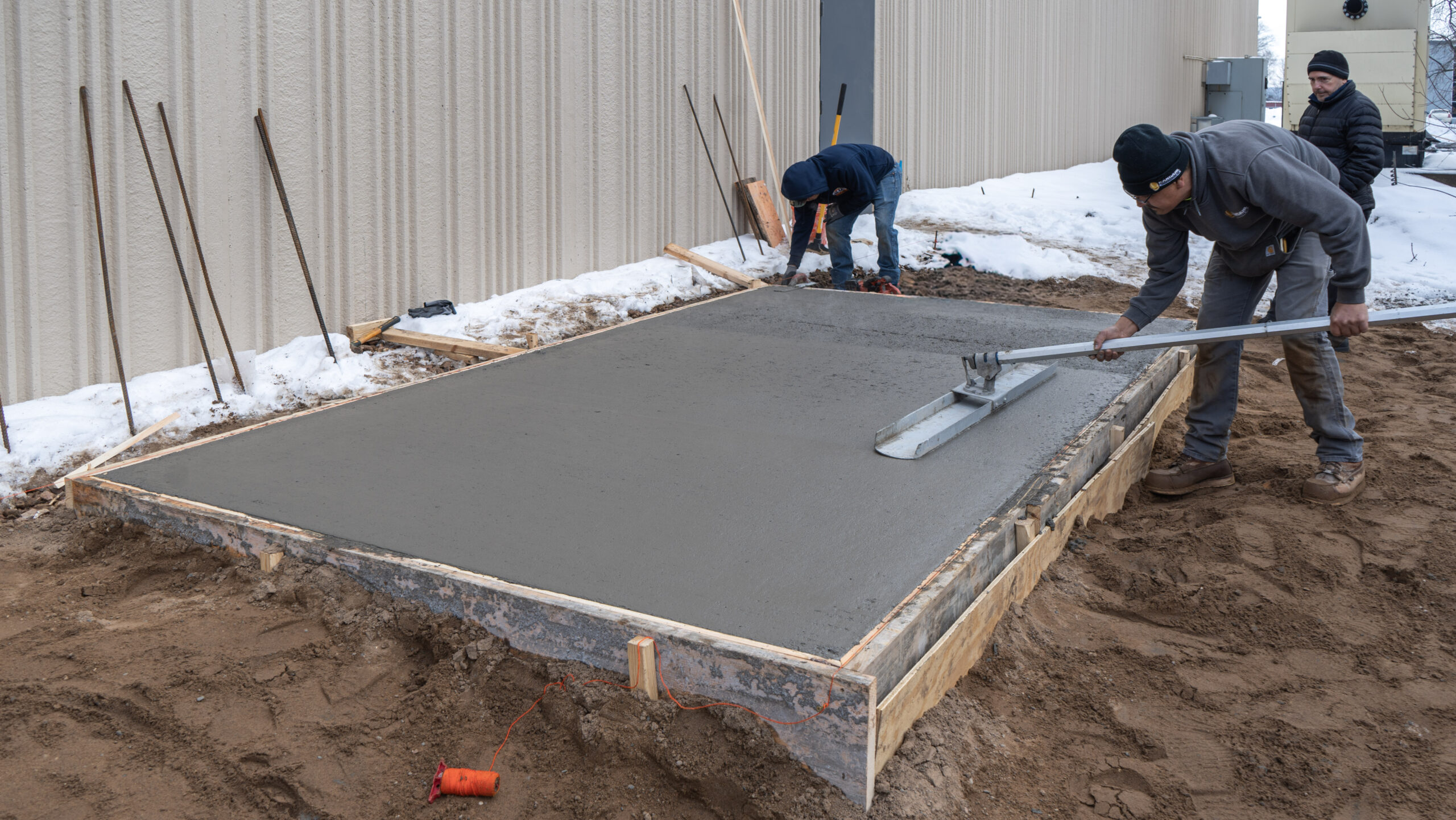
Fall in Minnesota is a transition season, and commercial concrete crews need flexibility. A pre-placement meeting to review forecasted conditions, mix design, and finishing plans should happen on every project. Selecting materials with a proven track record in variable conditions, monitoring temperatures daily, and adjusting curing methods — from fog sprays to insulated blankets — as conditions shift are all part of responsible commercial concrete management.
Partnering for Quality Commercial Concrete Year-Round
Whether it’s the height of summer heat or the first hard frost of the season, successful commercial concrete work comes down to planning, monitoring, and adapting. Randahl Construction stays proactive with mix design, admixture selection, and curing strategy so every commercial concrete pour meets the strength and durability standards our clients expect.