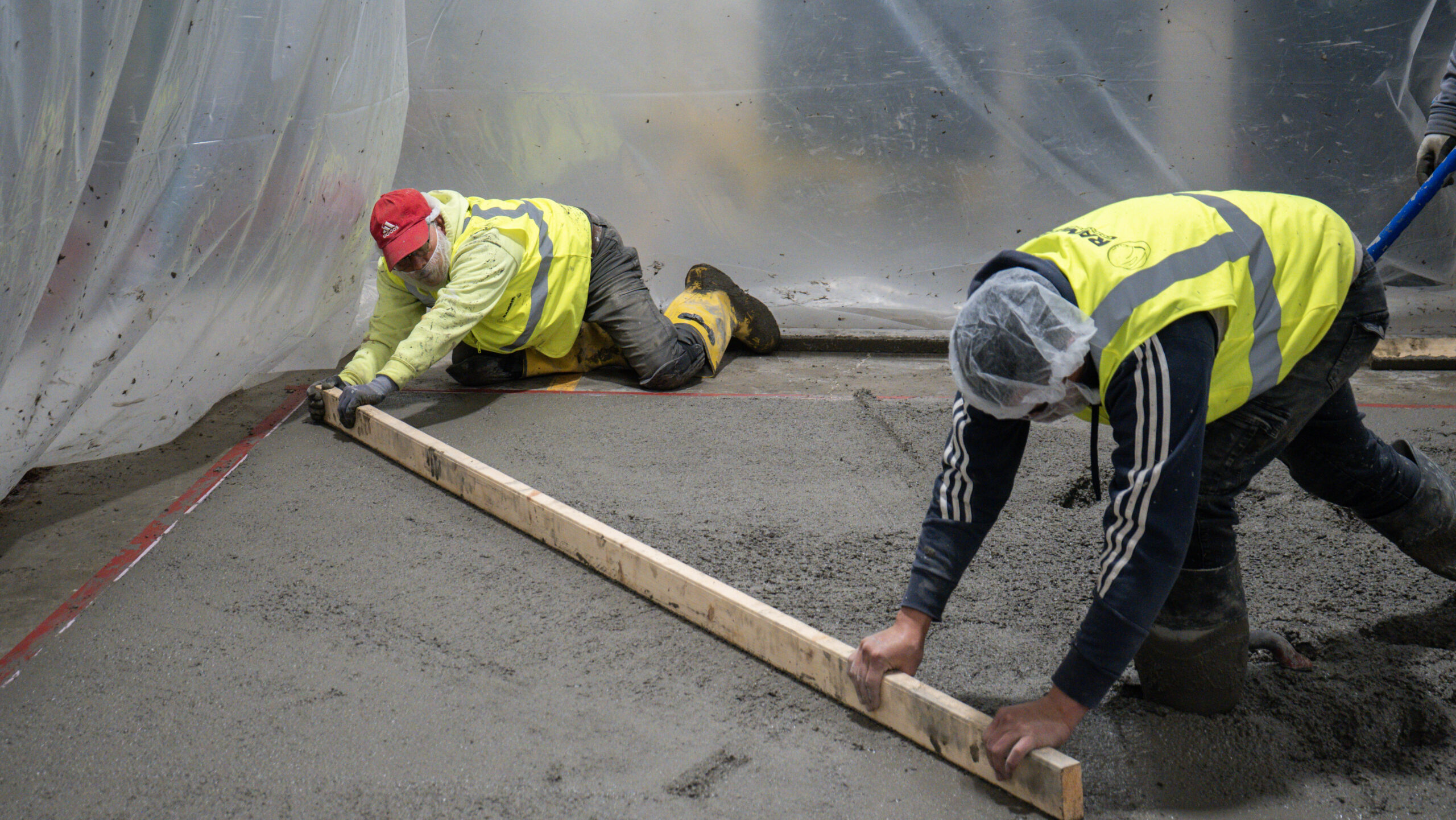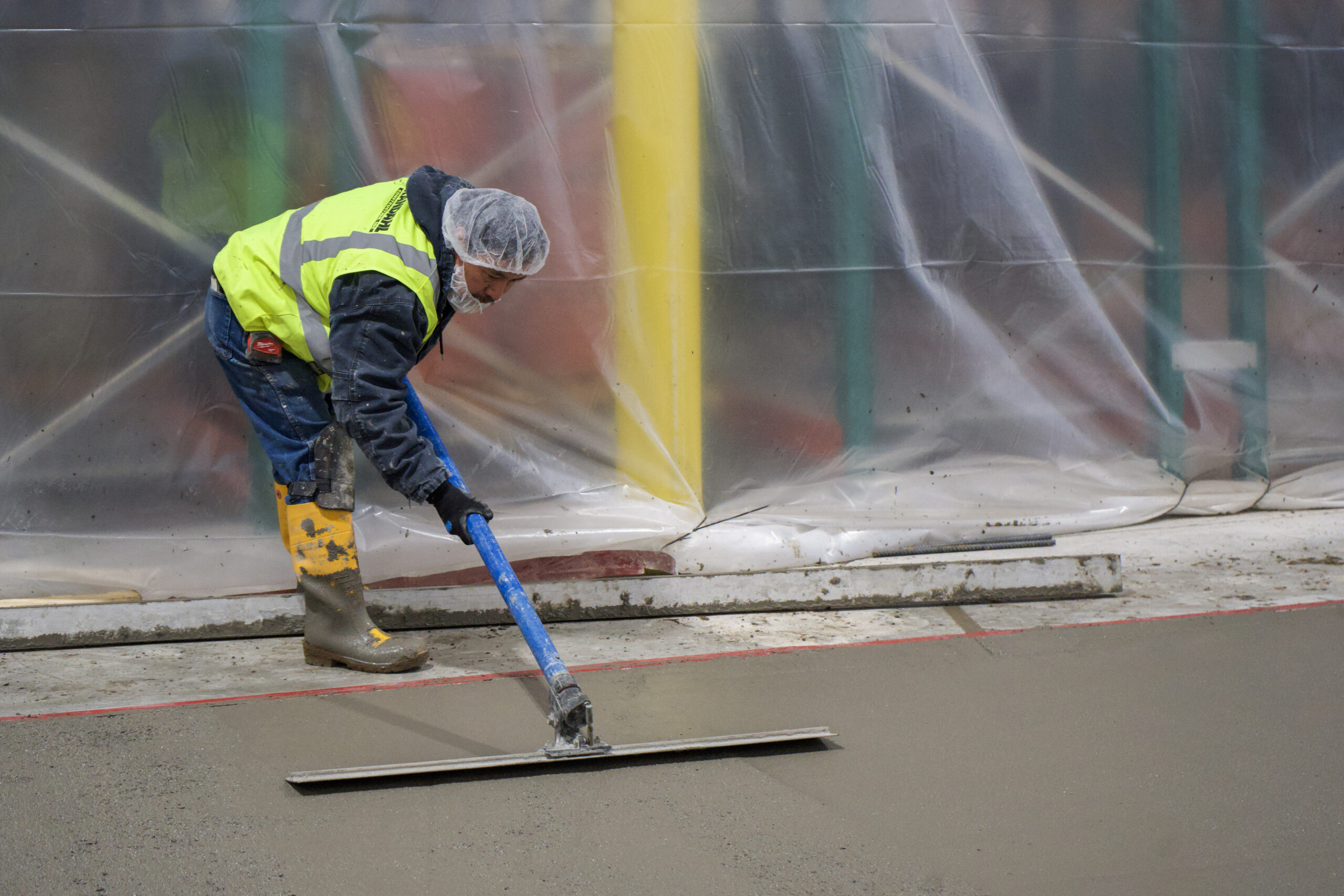
If you manage a facility in the Twin Cities that relies on heavy machinery, forklifts, or industrial equipment, you already know the quiet anxiety that comes with an aging concrete floor. Every crack and hairline fracture raises the same question: is this floor still safe? At Randahl Construction, we hear this concern constantly from facilities managers across Minneapolis and St. Paul, and it’s why working with an experienced Commercial Concrete Contractor matters so much for the long-term safety of your operation.
The Hidden Risk Beneath Your Equipment
Commercial concrete slabs aren’t just floors—they’re structural systems engineered to bear enormous, repeated loads. When that system begins to fail, the consequences go far beyond cosmetic damage. Equipment can shift, racking can become unstable, and employees working near heavy machinery face real injury risk. For facilities managers, this isn’t an abstract worry. It’s a liability that keeps them up at night, and it’s the primary reason so many turn to a trusted Commercial Concrete Contractor before a small problem becomes a costly emergency.
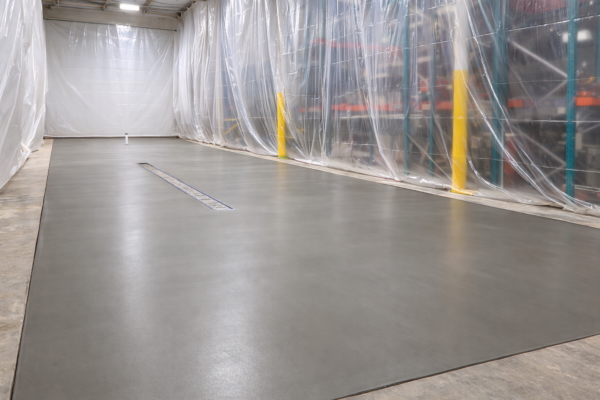
How We Evaluate Your Slab
When Randahl Construction is called in to assess a commercial concrete floor, we don’t guess—we investigate. Our process as a Commercial Concrete Contractor includes:
- Load Analysis: We review the type, weight, and frequency of machinery on the slab to confirm the existing concrete can support current and future demands.
- Structural Inspection: We examine the slab for cracking, spalling, settlement, and joint failure, identifying whether issues are surface-level or signs of deeper reinforcement problems.
- Subgrade Evaluation: A floor is only as good as what’s beneath it. We assess soil compaction and drainage to rule out root causes of slab failure.
- Reinforcement Review: For older facilities, we determine whether existing rebar, wire mesh, or fiber reinforcement still meets modern equipment loads.
- Code Compliance Check: Every recommendation is measured against current building and safety codes to keep your facility free of regulatory or liability risk.
This thorough evaluation allows us to recommend the right path forward, whether that’s targeted reinforcement, a full slab replacement, or a custom-engineered solution designed specifically for your facility’s operational needs.
The ROI of Doing It Right
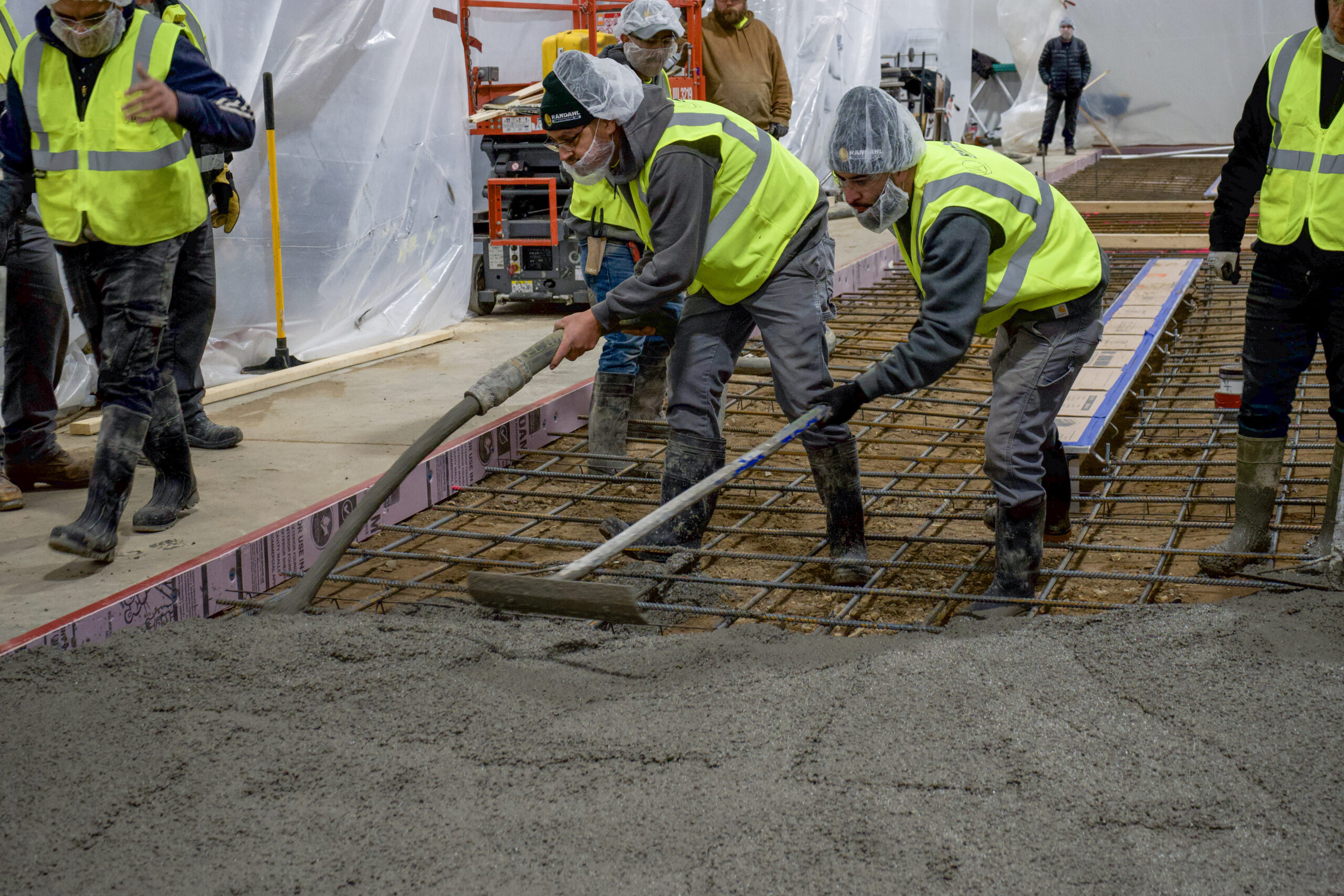
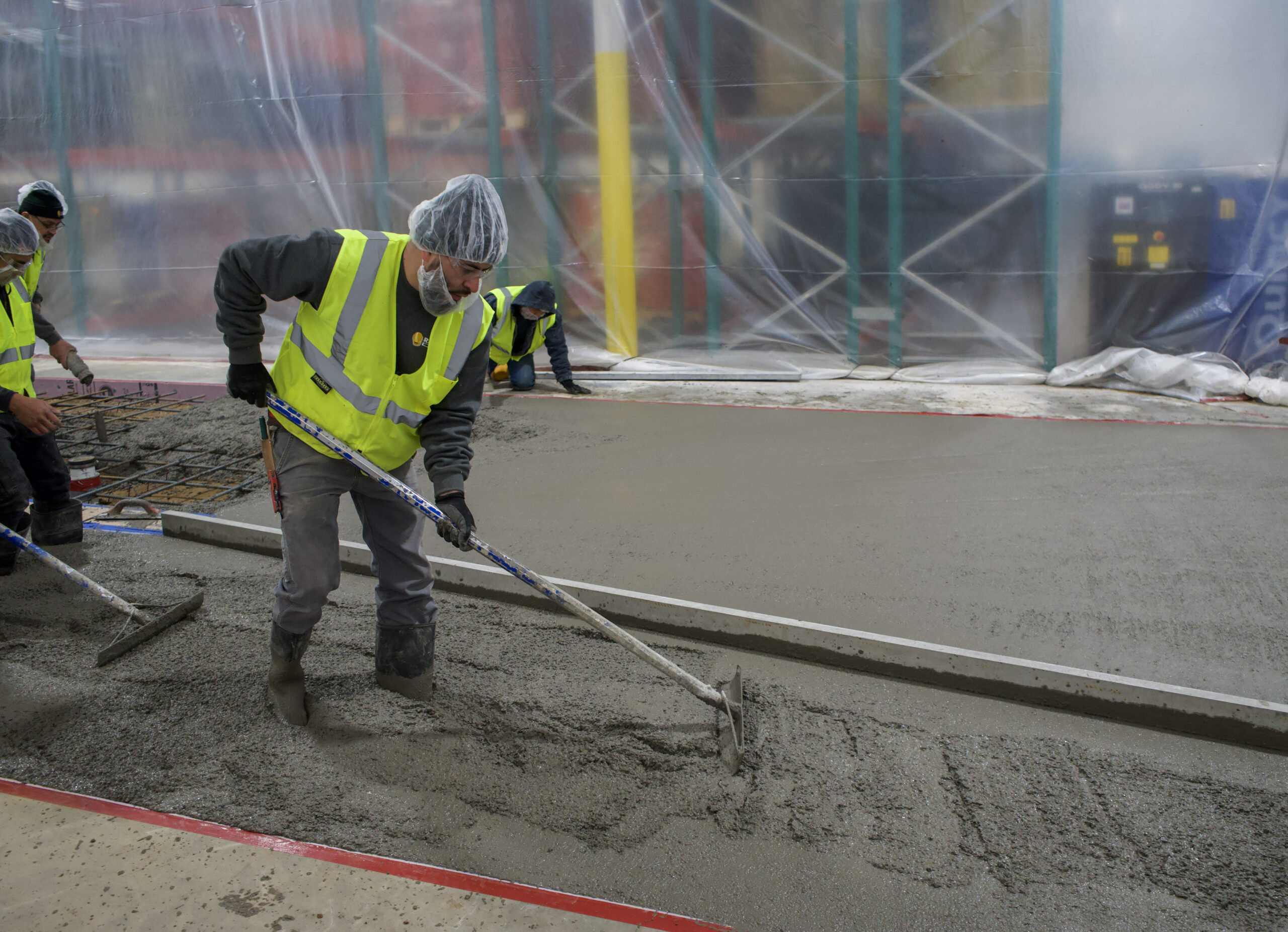
Many facilities managers view new concrete flooring as a cost center. In reality, it’s one of the highest-return investments a facility can make. A properly poured and reinforced slab, installed by a qualified Commercial Concrete Contractor, reduces equipment downtime, prevents costly emergency repairs, and extends the operational life of your machinery with a stable, level surface.
More importantly, a code-compliant floor dramatically reduces accident risk. Forklift tip-overs, equipment instability, and injuries tied to floor failure can result in lawsuits, OSHA penalties, and reputational damage that far exceed the cost of doing the job right the first time. A floor built to code protects your equipment, your people, and your bottom line.
Peace of Mind, Built to Last
The biggest benefit our clients describe after working with us isn’t just a stronger floor—it’s the ability to stop worrying. When you know your concrete slab has been evaluated, reinforced, and installed correctly by a qualified Commercial Concrete Contractor, you can focus on running your facility instead of bracing for the next failure.
Let's Talk About Your Floor
If your Twin Cities facility is showing signs of concrete fatigue, don’t wait for a failure to force your hand. Randahl Construction has spent years helping facilities managers across the metro area transform anxiety-inducing flooring into safe, code-compliant, high-performance slabs built for the long haul.
Contact Randahl Construction today to schedule a professional evaluation and discover why so many local facilities trust us as their Commercial Concrete Contractor of choice.