When a facility needs to house heavy equipment below grade, the concrete pit surrounding it becomes part of the machine’s foundation system, absorbing weight, resisting vibration, and keeping the structure stable for decades. As an experienced Industrial Concrete Pit Contractor, Randahl Construction treats every equipment pit as a structural engineering problem first and a concrete pour second.
Starting With the Equipment, Not the Hole
Good pit design doesn’t begin with a shovel — it begins with a spec sheet. Every piece of heavy machinery has its own weight, footprint, and operating characteristics, and those details drive the entire design. A pit built for a static storage tank looks nothing like one built for a reciprocating compressor or a large rotating pump. As a dedicated Industrial Concrete Pit Contractor, Randahl Construction reviews equipment specifications and manufacturer load requirements before finalizing any pit design. Skipping this step is a common cause of premature cracking, settling, and costly rework later on.
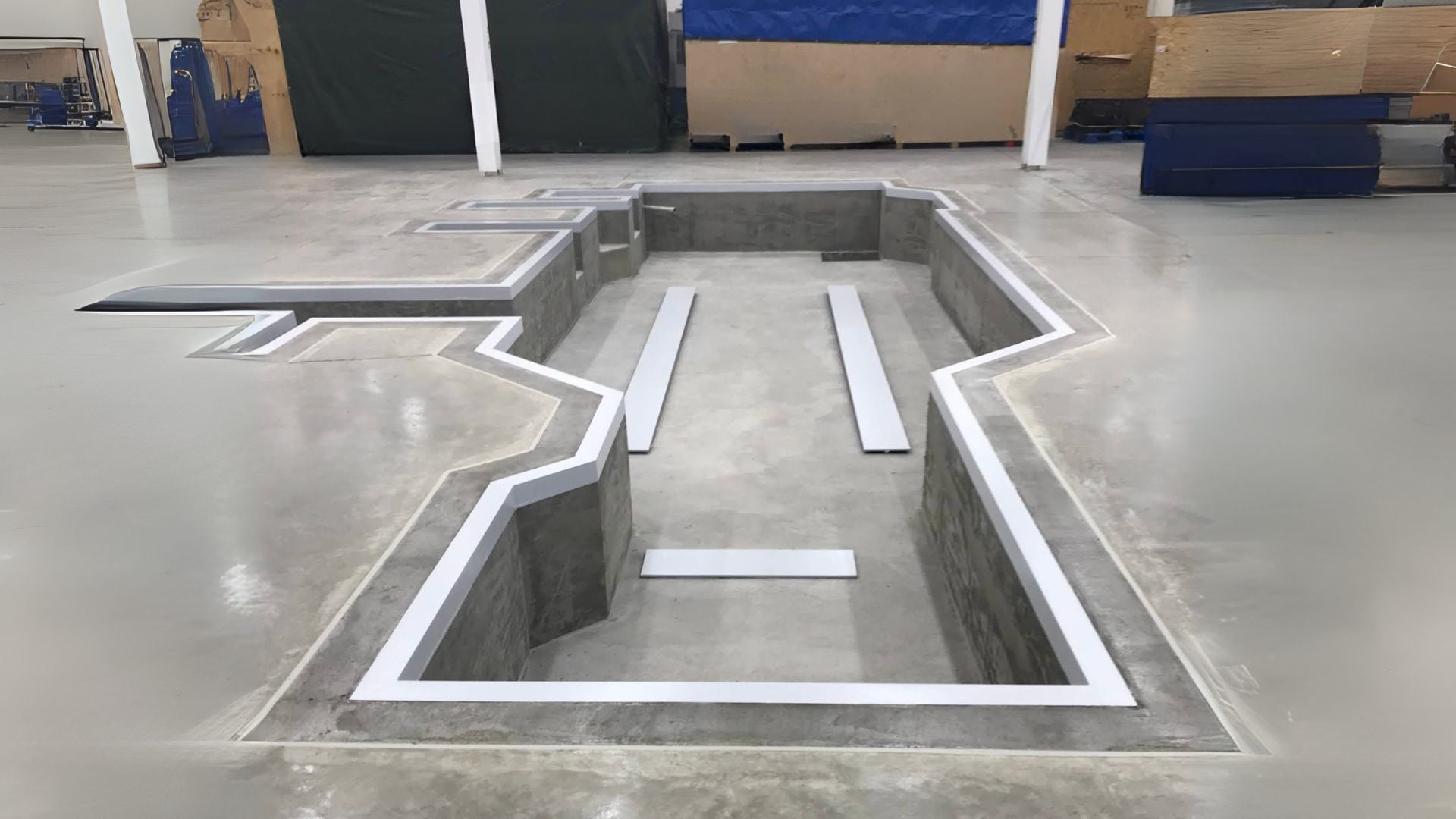
Weight Determines Wall and Slab Thickness
The most straightforward factor in pit design is load-bearing capacity. Heavier equipment pushes more force down through its base and out through the surrounding walls, so the concrete has to be sized accordingly. A pit holding a few thousand pounds of stationary equipment can often use standard slab and wall thicknesses. A pit built to support multi-ton industrial machinery is a different story — walls and slabs need to be thicker, and reinforcement needs to be denser.
This is where rebar spacing becomes critical. Reinforcement isn’t added just for strength; it’s calculated against the loads the concrete will experience. Tighter rebar spacing distributes weight evenly across the slab and walls, reducing the risk of localized stress points that cause cracking over time. A qualified Industrial Concrete Pit Contractor runs these calculations against the specific equipment being installed, not a generic template.
Vibration Changes the Equation
Weight alone isn’t the whole story. Machinery that generates vibration — compressors, generators, large motors, certain pumps — introduces a dynamic load that static equipment doesn’t produce. Left unmanaged, vibration can transfer through the pit into the surrounding slab, walls, and even adjacent structures, leading to fatigue cracking, loosened connections, and structural issues that extend well beyond the pit itself.
To address this, pit design sometimes calls for isolated foundations — a separate, structurally independent concrete mass poured specifically to house vibrating equipment. Isolated foundations are engineered to absorb and dampen vibration before it travels outward, protecting both the equipment and the surrounding facility. Deciding whether isolation is necessary, and detailing it correctly, is part of what separates an experienced Industrial Concrete Pit Contractor from a general concrete crew.
Why This Level of Detail Matters
An equipment pit that looks fine on the surface can still fail if it wasn’t engineered around the machinery it supports. Undersized walls, inadequate reinforcement, or a missed vibration analysis may not show up on day one — but they will eventually, often as costly downtime or structural repairs. Getting the design right from the start protects both the equipment and the facility around it.
Partnering With the Right Contractor
Every facility has different equipment, loads, and operating conditions, which means every concrete pit deserves a custom engineering approach rather than a one-size-fits-all pour. Randahl Construction works closely with facility owners and equipment manufacturers to match wall thickness, slab thickness, and reinforcement to the machinery’s real-world demands.
If your facility is planning new equipment installation or needs to upgrade an existing pit, Randahl Construction is the Industrial Concrete Pit Contractor built to handle it. Reach out today to discuss your project and get a pit designed to perform for the long haul.