Commercial Concrete Pads
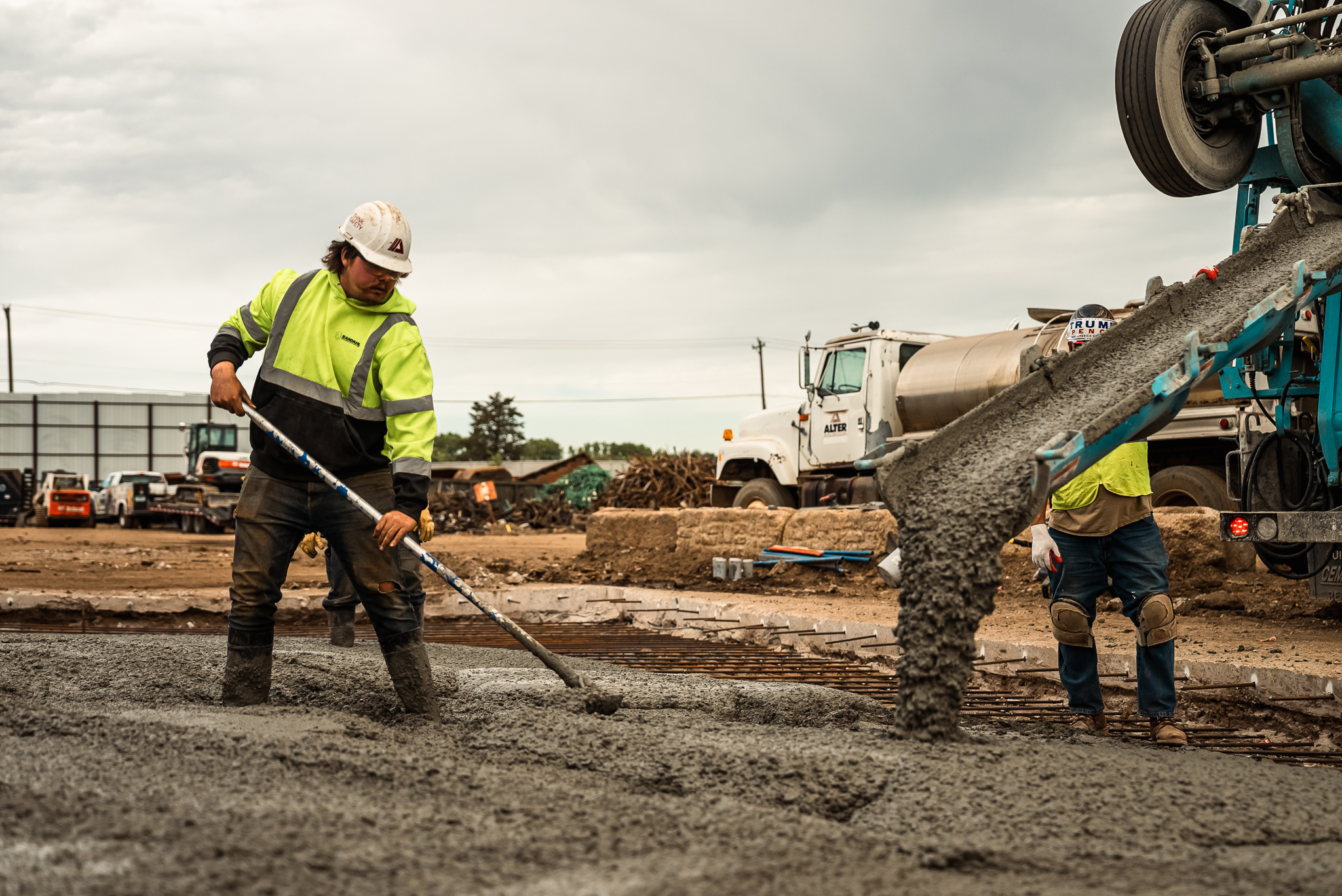
At Randahl Construction our team specializes in Commercial Concrete Pads designed to support heavy equipment, machinery, and structural loads for businesses across diverse industries. Our team delivers precision-engineered concrete solutions that provide a stable, level foundation capable of withstanding demanding operational requirements and harsh environmental conditions. Whether you need generator pads, HVAC equipment bases, or large-scale industrial platforms, we ensure every Commercial Concrete Pad meets exact specifications and stands the test of time.
Why Choose Randahl
Our commercial concrete pads are designed for performance. We engineer every concrete pad to meet your load-bearing requirements, whether you’re supporting machinery or mechanical equipment. Every pad is poured to meet finish tolerances and drainage requirements. We know commercial and industrial concrete pads.
Our Process

Site Prep
Excavation, grading, compaction, and layout
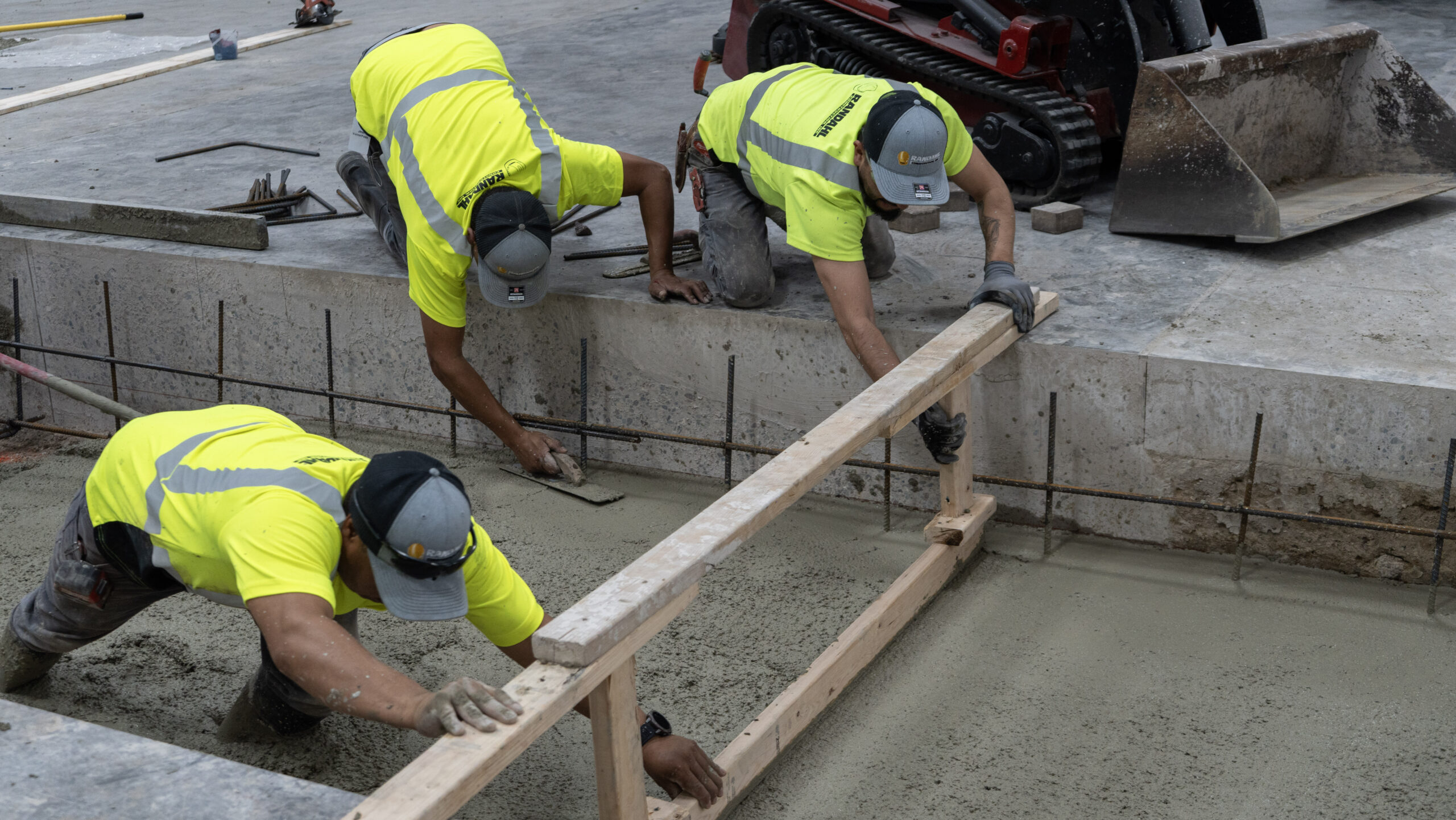
Forming & Rebar
Set forms and reinforced steel to Engineer's specs
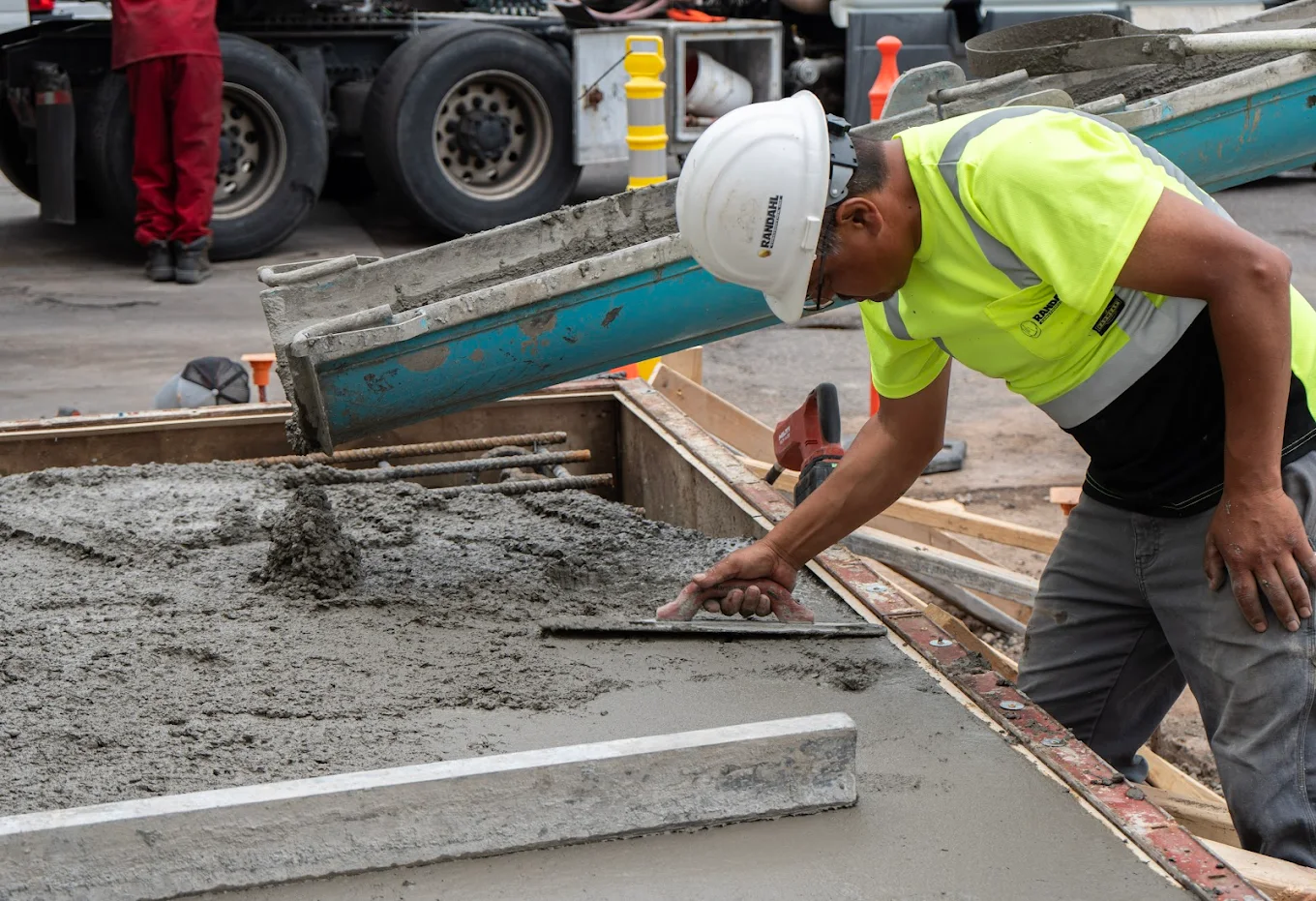
Pour & Finish
Pour high strength concrete, smooth trowel and seal
Cure & Quality Check
Remove forms, saw-cut expansion joints, and clean up
Frequently Asked Questions
1. What is a commercial concrete equipment pad?
A commercial concrete equipment pad is a reinforced concrete foundation designed to support heavy mechanical, electrical, or industrial equipment. Equipment pads provide a stable, level surface that distributes weight evenly, minimizes vibration, and helps protect equipment from settling or structural movement. They are commonly used for HVAC systems, generators, transformers, chillers, compressors, industrial machinery, and manufacturing equipment.
2. How long does it take to install a commercial concrete pad?
Most commercial concrete pad projects take 1-5 days from site prep to final pour, depending on pad size, site conditions, and weather. Larger or more complex pads — such as those requiring extensive excavation, drainage work, or heavy reinforcement — may take longer. Randahl Construction provides a project timeline upfront so you can plan around it.
3. How long does a concrete pad need to cure before use?
A commercial concrete pad is typically safe for foot traffic within 24-48 hours, can support light vehicles around 7 days, and reaches full structural strength at about 28 days. Curing time can be affected by weather, mix design, and pad thickness, which is why timelines are confirmed on-site for each project.
4. Do I need a permit for a commercial concrete pad?
In most areas, yes — commercial concrete pads typically require a building or site permit, especially when supporting equipment, dumpsters, or structures. Permit requirements vary by municipality, so Randahl Construction manages the permitting and code compliance process as part of the project.
5. What's the difference between a commercial-grade concrete pad and a standard slab?
Commercial-grade concrete pads are built to handle heavier, more frequent loads than standard residential slabs, typically using thicker pours, higher PSI concrete mixes, and steel reinforcement. They’re engineered for specific uses like equipment pads, loading areas, or dumpster enclosures, where load capacity and durability matter more than they would for a patio or walkway.
6. How thick should a commercial concrete pad be?
Commercial concrete pad thickness typically ranges from 4 to 8 inches depending on the load it needs to support. Light-duty pads for storage or foot traffic usually need 4-6 inches, while pads supporting HVAC equipment, dumpsters, or vehicle traffic require 6-8 inches with rebar or wire mesh reinforcement. Randahl Construction evaluates the intended use and local soil conditions before recommending a thickness.
7. What types of equipment require concrete equipment pads?
Commercial concrete equipment pads are commonly installed for:
- HVAC rooftop and ground-mounted units
- Industrial machinery
- Manufacturing equipment
- Chillers and cooling towers
- Backup generators

- Electrical transformers
- Air compressors
- Pumps
- Boilers
- Processing equipment
- Recycling equipment
- Loading and conveyor systems
The size and reinforcement of each pad are engineered based on the equipment’s weight, operating conditions, and manufacturer requirements.
8. How long does it take to install a commercial concrete equipment pad?
Project timelines depend on the size of the pad, weather conditions, site access, reinforcement requirements, and concrete curing time. Smaller equipment pads may be completed within a few days, while larger industrial foundations with complex reinforcement or embedded components may require additional time. Concrete must also cure sufficiently before heavy equipment is installed.
9. Can an existing equipment pad be repaired or expanded?
In some cases, yes. Minor cracks or surface deterioration can often be repaired, while larger structural damage may require partial or complete replacement. Existing pads can sometimes be expanded if engineering evaluations determine the original foundation and surrounding soils can support the additional loads.
10. What causes concrete equipment pads to crack or fail?
Equipment pads may crack or fail due to inadequate subgrade preparation, insufficient reinforcement, overloaded equipment, poor drainage, freeze-thaw cycles, soil settlement, or improper concrete installation. Proper engineering, quality materials, and experienced installation significantly reduce the risk of premature failure.
View Our Blog
Other Concrete Services
Ready for a Free Site Visit?
Trusted by