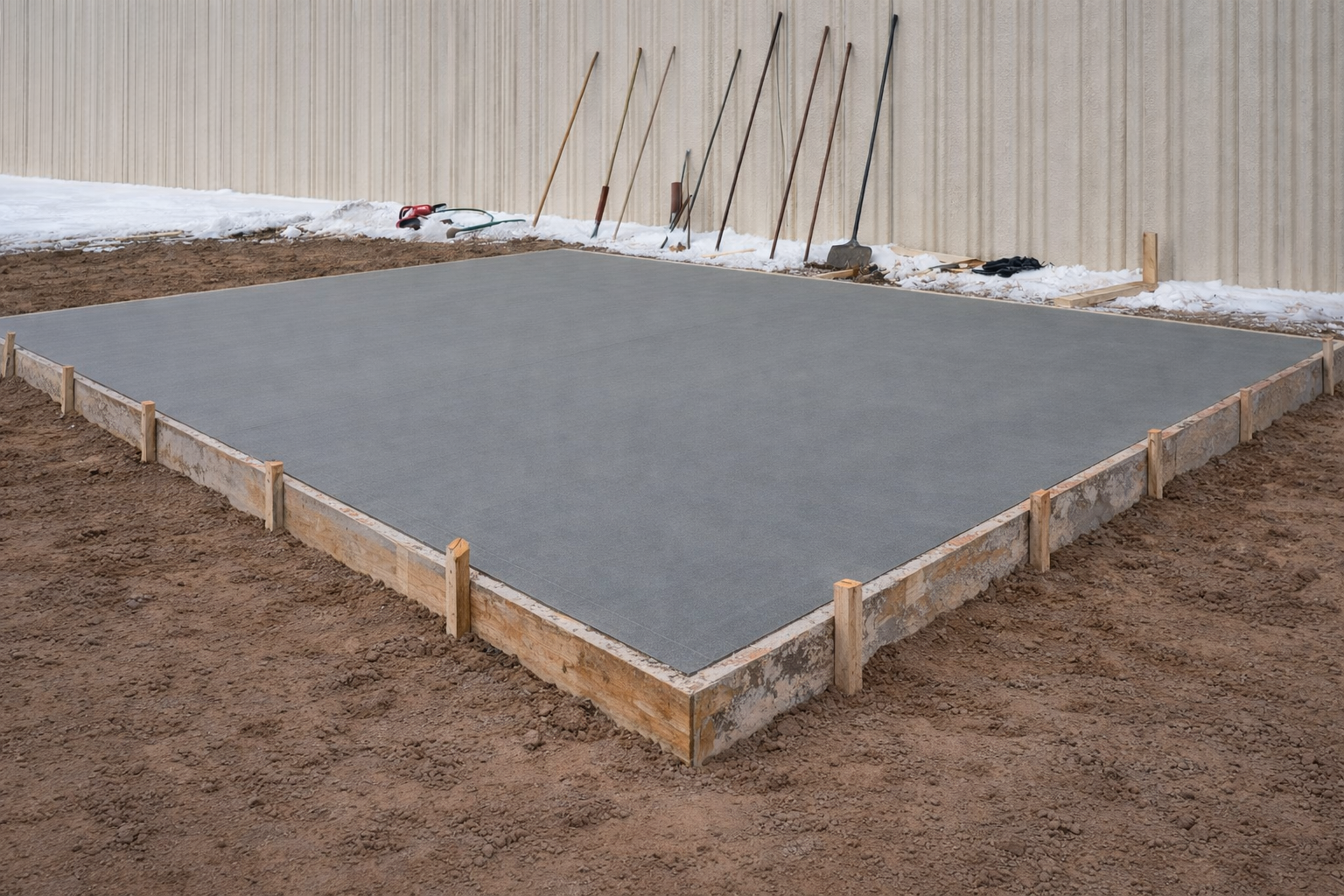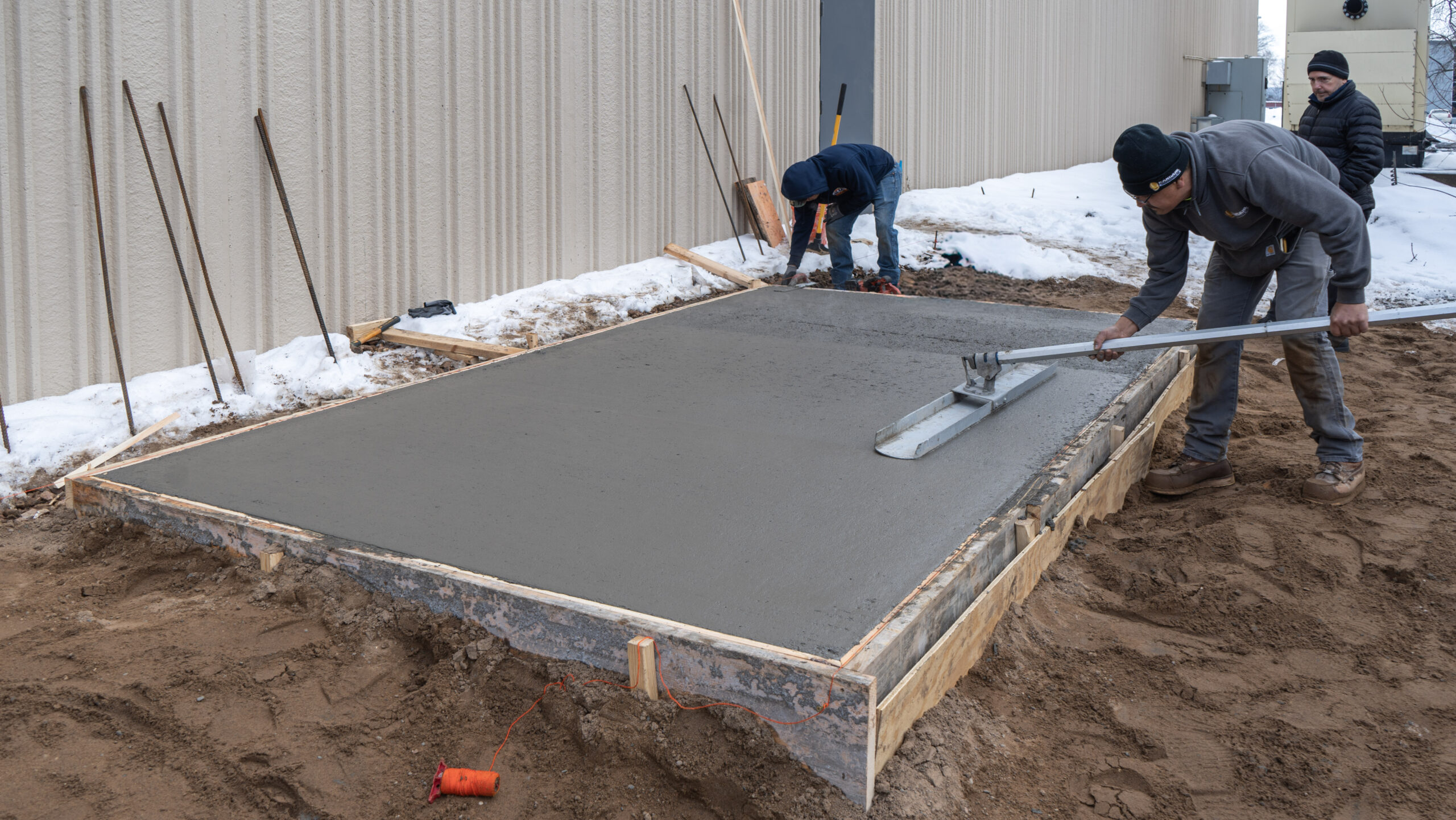

When temperatures drop below freezing in Minnesota, commercial concrete work doesn’t stop—but it does require specialized expertise. For facilities managers and commercial building owners across the greater Minnesota area, understanding cold weather concrete challenges can mean the difference between a durable installation and costly failures that compromise safety and operations.
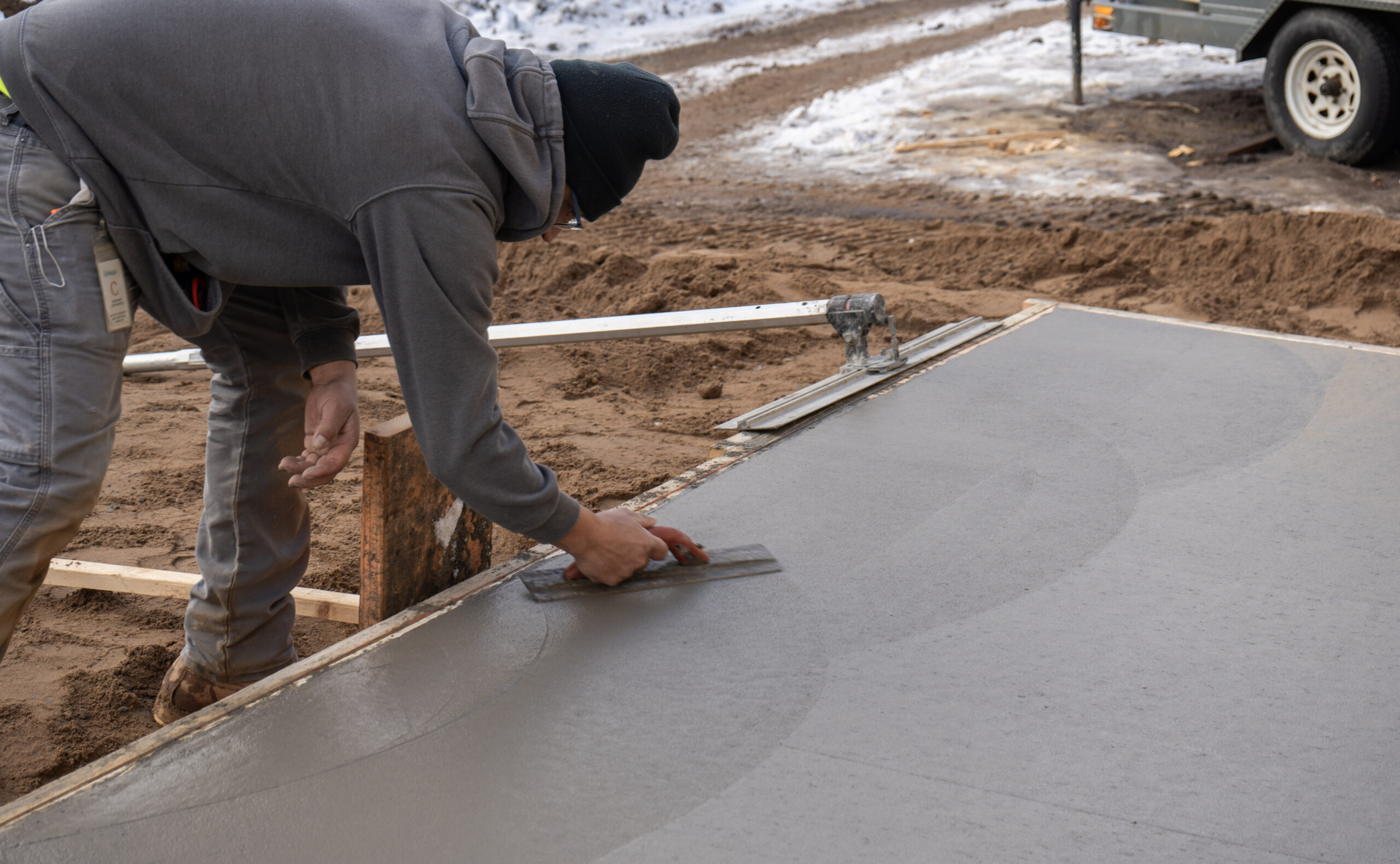
The Minnesota Winter Challenge
Minnesota winters present unique obstacles for commercial concrete projects. When temperatures fall below 40°F, concrete curing slows dramatically, and below 32°F, water in fresh concrete can freeze and expand, creating internal damage that permanently weakens the structure. Exterior concrete faces additional threats as relentless freeze-thaw cycles force water into cracks where it expands, while deicing salts accelerate deterioration through scaling and spalling. For commercial property owners, failed exterior concrete means deteriorating loading docks that disrupt operations, crumbling parking lots that create liability exposure, and expensive emergency repairs that threaten business continuity.
Common Cold Weather Concrete Problems
Freeze-Thaw Damage: This is the number one threat to commercial concrete in Minnesota. When water penetrates concrete and freezes, it expands by approximately 9%, creating internal pressure that causes scaling, spalling, and structural cracks. Facilities managers often discover this damage in spring when loading dock areas, parking structures, and exterior slabs/sidewalks show severe deterioration.
Delayed Setting Times: Cold temperatures dramatically slow the chemical reaction that allows concrete to cure and gain strength. What should take 24-48 hours in normal conditions can take days or even weeks in freezing weather. This extended timeline disrupts construction schedules and leaves commercial concrete vulnerable to damage during the critical curing period.
Surface Defects: Rapid temperature changes between day and night can cause plastic shrinkage cracking and surface scaling. For commercial building owners, these defects aren’t just cosmetic—they allow moisture penetration that accelerates deterioration and creates slip hazards for employees and customers.
Reduced Long-Term Strength: Commercial concrete that freezes before reaching adequate strength will never achieve its designed load-bearing capacity. For facilities with heavy equipment, forklifts, or significant foot traffic, this means premature failure and costly replacement.
How Randahl Construction Solves Cold Weather Concrete Challenges
At Randahl Construction, we’ve spent years perfecting cold weather commercial concrete techniques specifically for Minnesota’s harsh climate. Our approach eliminates the risks that plague standard concrete installations during winter months.
Temperature-Controlled Processes: We utilize heated enclosures and ground thawing equipment to maintain optimal concrete placement temperatures. This ensures your commercial concrete achieves proper strength development regardless of outdoor conditions, protecting your investment and maintaining your project timeline.
Specialized Mix Designs: Our cold weather commercial concrete formulas include accelerating admixtures that speed curing times and air-entraining agents that create microscopic air pockets. These pockets provide space for freezing water to expand without damaging the concrete matrix—critical protection for Minnesota’s freeze-thaw cycles.
Extended Protection Periods: We don’t just pour and leave. Randahl Construction maintains insulated blankets and heating systems throughout the critical curing period, ensuring your commercial concrete reaches target strength before exposure to freezing temperatures. This eliminates the primary cause of winter concrete failure.
Quality Assurance: Our team conducts regular temperature monitoring and maturity testing to verify strength development. For facilities managers and commercial building owners, this means documentation that your concrete meets specified performance standards—even in subzero conditions.
The Bottom Line for Minnesota Commercial Projects
Cold weather doesn’t mean compromising on commercial concrete quality or delaying critical projects. With proper planning and execution, Minnesota winters present viable opportunities for facility improvements, expansions, and repairs.
Randahl Construction’s specialized approach to cold weather commercial concrete eliminates safety risks associated with freeze-thaw damage, prevents premature concrete failure, and ensures your facility maintains operational integrity year-round. Whether you’re managing a manufacturing plant in St. Paul, a distribution center in Minneapolis, or a commercial building anywhere in greater Minnesota, our expertise keeps your concrete projects on schedule and your facilities safe.
Don’t let winter weather dictate your facility’s maintenance schedule or force you into emergency repairs. Contact Randahl Construction to learn how our cold weather commercial concrete services protect your investment in Minnesota’s toughest conditions.